
Sewage ejector pump installation
Sewage ejector pump installation puts a sealed basin and pump under a bathroom, laundry or kitchen that sits below the house's gravity drain, so those fixtures can drain up to it. On the Gulf Coast that is rarely a basement; it is the garage apartment, the pool house, the slab addition, the dock bathroom, or the older house whose lowest drain ended up below a new street main. Grinder Pump Gents installs and replaces sewage ejector systems in homes across Baldwin and Mobile counties.
The residential code adopted statewide in Alabama sets the rules for the basin, the pump, the valves and the vent, and the installation is built to them.
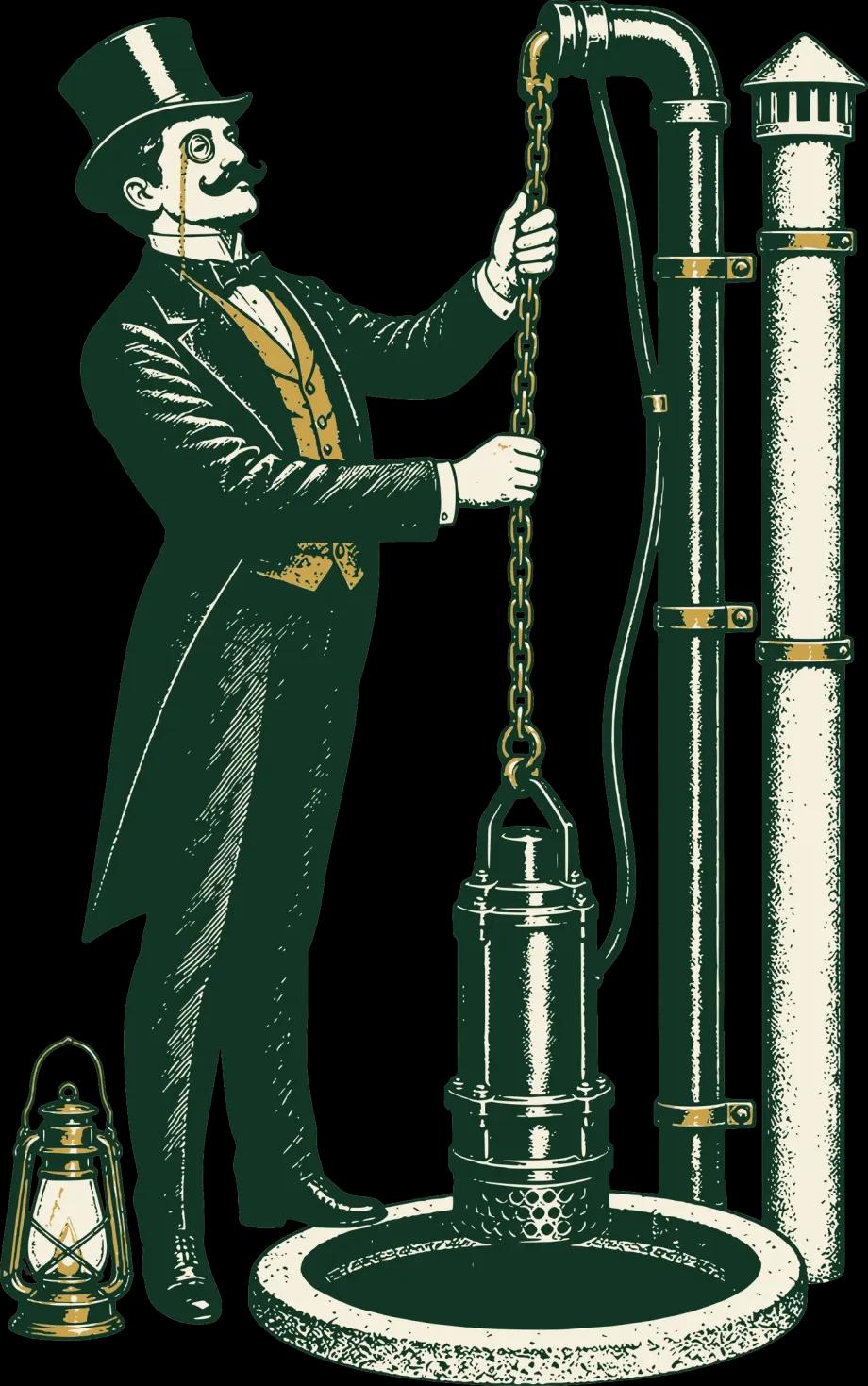
Plate LXV. Lowered into its pit on a short chain. It will not be seen again, one hopes.
- Owner-run: Brandon Byrd does the work
- Alabama master plumber MP-4462
- More than a decade on grinder pumps
- You see the failed part before any repair is agreed
- Emergency line open 24/7: (251) 850-8031
When you need one
Gravity needs fall. If a fixture's drain is lower than the pipe it must reach, the waste has to be lifted, and a sewage ejector is the indoor way to do it. If the whole house is below the sewer main, that is a grinder station outside instead, and if the lift is from a garage apartment or pool house across the yard, an outdoor ejector-style basin does the job. The ejector handles only the low fixtures; everything else in the house keeps draining by gravity.
What the code requires
Alabama's plumbing board adopted the 2021 International Residential Code for residential work, and its sump and ejector section says:
- The sump is at least 18 inches in diameter and 24 inches deep, with a gas-tight removable cover.
- An ejector that receives discharge from a toilet handles 2 inch solids.
- The discharge has a check valve and a full-open valve.
- A 2 inch discharge pump delivers at least 21 gallons a minute.
What the manufacturers add
Zoeller's instructions for its sewage systems call for a 2 inch Schedule 40 discharge rather than DWV pipe, the check valve arrow pointing away from the basin, a 2 inch vent connected to the house vent system, and a GFCI receptacle. Its residential 912 packages use 30 gallon (18 by 30 inch) and 41 gallon (24 by 24 inch) basins with a 4 inch inlet, and sell the check valve separately. Liberty's packaged simplex systems come in 41 and 70 gallon basins, and its 700-Series systems are for indoor use only. Zoeller's APak alarm gives an 86 decibel indoor warning with battery backup; the outdoor version is a sealed 82 decibel unit.
How we build it
Basin set into the floor with its inlet at the right height for the fixtures, pump sized for 2 inch solids with a float that cannot hang on the wall, Schedule 40 discharge with the check valve and shutoff where you can reach them, the vent tied into the house system so the basin breathes without pulling sewer gas into the room, a dedicated circuit, and an alarm on its own power where possible. The cover goes on gas-tight. Then the system is run through a full cycle with the fixtures that feed it. Replacing an existing ejector follows the same list; the old basin is kept if it is sound and the right size, and replaced if it is not.
Permits and who does the work
An ejector is inside the house, so the sewer utility's grinder rules do not apply, but the local building department's plumbing permit does, and the state's residential code governs where it conflicts with a local one. The work is done by Brandon Byrd, a licensed Alabama master plumber. Grease, wipes and rags remain the enemy: an ejector passes solids but does not grind them, so what jams a grinder jams an ejector faster.
Request service from this page
Your name, a way to reach you and what the pump is doing. That is all we need to start. Town and utility are optional.
Sewage backing up or overflowing? Stop using water and call now: (251) 850-8031. On a utility-owned pump, call your utility first.
How the visit goes
Step 1: Measure the fall
Fixture heights, the drain they must reach, and the route for discharge and vent are confirmed before anything is ordered.
Step 2: Permit
Plumbing permit pulled with the local building department.
Step 3: Set the basin
Cut in, bedded, inlet at height, gas-tight cover fitted.
Step 4: Pump, valves, vent, power
2 inch solids pump with float, Schedule 40 discharge with check valve and full-open valve, 2 inch vent to the house system, dedicated circuit, alarm.
Step 5: Cycle and inspect
Full fill-and-pump cycle with the feeding fixtures, alarm tested, inspection scheduled.
Questions people ask
Do I need a sewage ejector pump for a basement bathroom?
If the bathroom's drain is below the house's main drain, yes. The same is true for a bathroom in a garage apartment, pool house or slab addition that sits below the line, which is the common case along this coast where basements are rare.
What size sewage ejector pit do I need?
The residential code's minimum sump is 18 inches in diameter by 24 inches deep, with a gas-tight cover. Zoeller's residential packages are 30 or 41 gallons and Liberty's 41 or 70 gallons. The right one depends on how many fixtures drain into it and how often.
Can an ejector pump be installed outside?
Yes. An outdoor ejector-style basin serves a detached building whose drain cannot reach the house line by gravity. The basin is set outside, the alarm is a sealed outdoor unit, and the discharge joins the house's gravity drain.
How is replacing a sewage ejector pump different from a new installation?
The basin, discharge and vent usually stay if they are sound and meet the code. The pump, float, check valve and cover gasket are replaced and the system cycled. If the old basin is undersized or the cover cannot be made gas-tight, it becomes a new installation.
Does the utility have to approve an ejector pump?
No. The utility rules on this site are about grinder pumps on pressure sewers. An ejector discharges into your own gravity drain inside the property, so the building department's permit is the approval.
Sources and facts
- Alabama rule 720-X-1-.02: the 2021 IRC governs residential plumbing statewide where it conflicts with a local code. Alabama Plumbers and Gas Fitters Examining Board rule 720-X-1-.02 (2021 IRC adopted for residential plumbing), admincode.legislature.state.al.us/… (read 2026-11-04)
- IRC P3007: sump at least 18 in by 24 in with a gastight cover; 2 inch solids for ejectors taking water closets; check valve plus full-open valve; 21 gpm minimum on a 2 inch discharge. 2021 International Residential Code, Section P3007 Sumps and Ejectors (text via up.codes), up.codes/… (read 2026-11-04)
- Zoeller: 2 inch Schedule 40 discharge (not DWV), check valve arrow away from basin, 2 inch vent to the vent system, GFCI receptacle, inspect every 3 months. Zoeller pre-plumbed sewage system instructions, zoellerathome.com/…; Zoeller sewage pump instructions SW1316, zoellerathome.com/… (read 2026-11-04)
- Zoeller 912: basins 18 x 30 in (30 gal) and 24 x 24 in (41 gal), 4 inch inlet, check valve sold separately, APak indoor alarm 86 dB with battery backup, outdoor alarm NEMA 4X 82 dB. Zoeller 912 residential sewage ejector systems manual, manuals.plus/… (read 2026-11-04)
- Liberty simplex systems: 41 and 70 gallon basins; 700-Series systems are indoor only. Liberty Pumps Installation Manual 7225000L, Simplex Sewage/Grinder Systems, www.libertypumps.com/… p.1, 7 (read 2026-11-04)
Related
- Grinder Pump vs Ejector Pump: The Real Differences
- Sewage Ejector Pump Problems: Float, Alarm, Smell, Cycling
- Sewage Ejector Pump Repair in Baldwin & Mobile, AL
- Sewage Ejector Pumps: What They Are and How They Work
- Grinder Pump Check Valve and Anti-Siphon Valve Repair
- Who Owns Your Grinder Pump? Rules by Utility, Quoted
Need the pump looked at?
Tell us what the panel is doing and where you are. We reply with the next safe step and a visit time.